Yardy
UIUX
Individual
4 Weeks
Figma/Figma make
A modern yard work platform that helps young people find local gigs, earn extra money, and make private yard workers more visible.
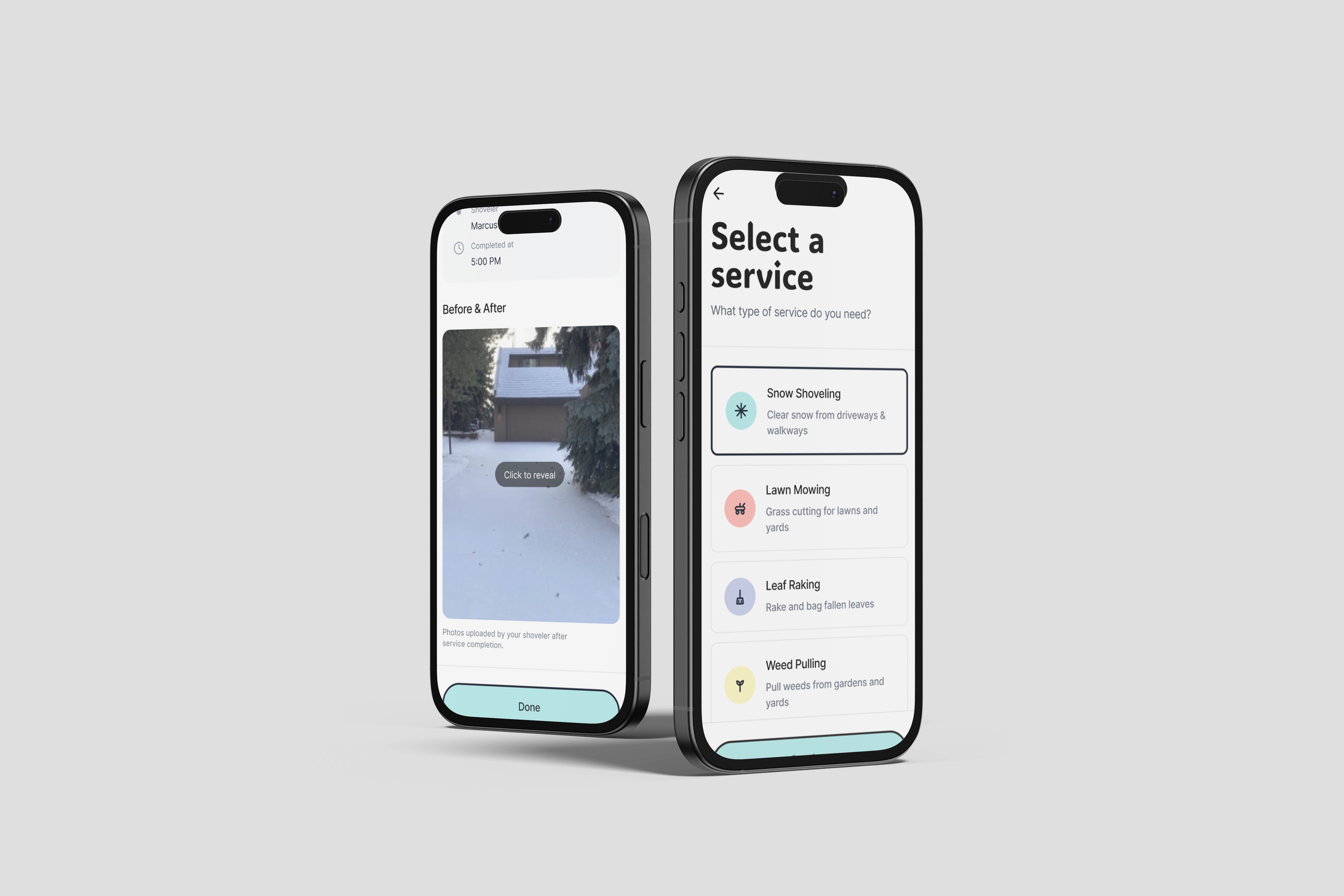
Yardy is a service app that makes temporary yard work visible, especially seasonal jobs like snow shoveling, lawn mowing, leaf raking, and walkway cleaning.
These jobs are often treated as small, simple, or temporary, but they require physical effort, time, reliability, and trust. Yardy helps turn invisible neighborhood labor into clear, trackable, and recognized work.
App Functions
“Through Yardy, I wanted to turn temporary yard work from scattered private gigs into visible, structured, and valued labor.”
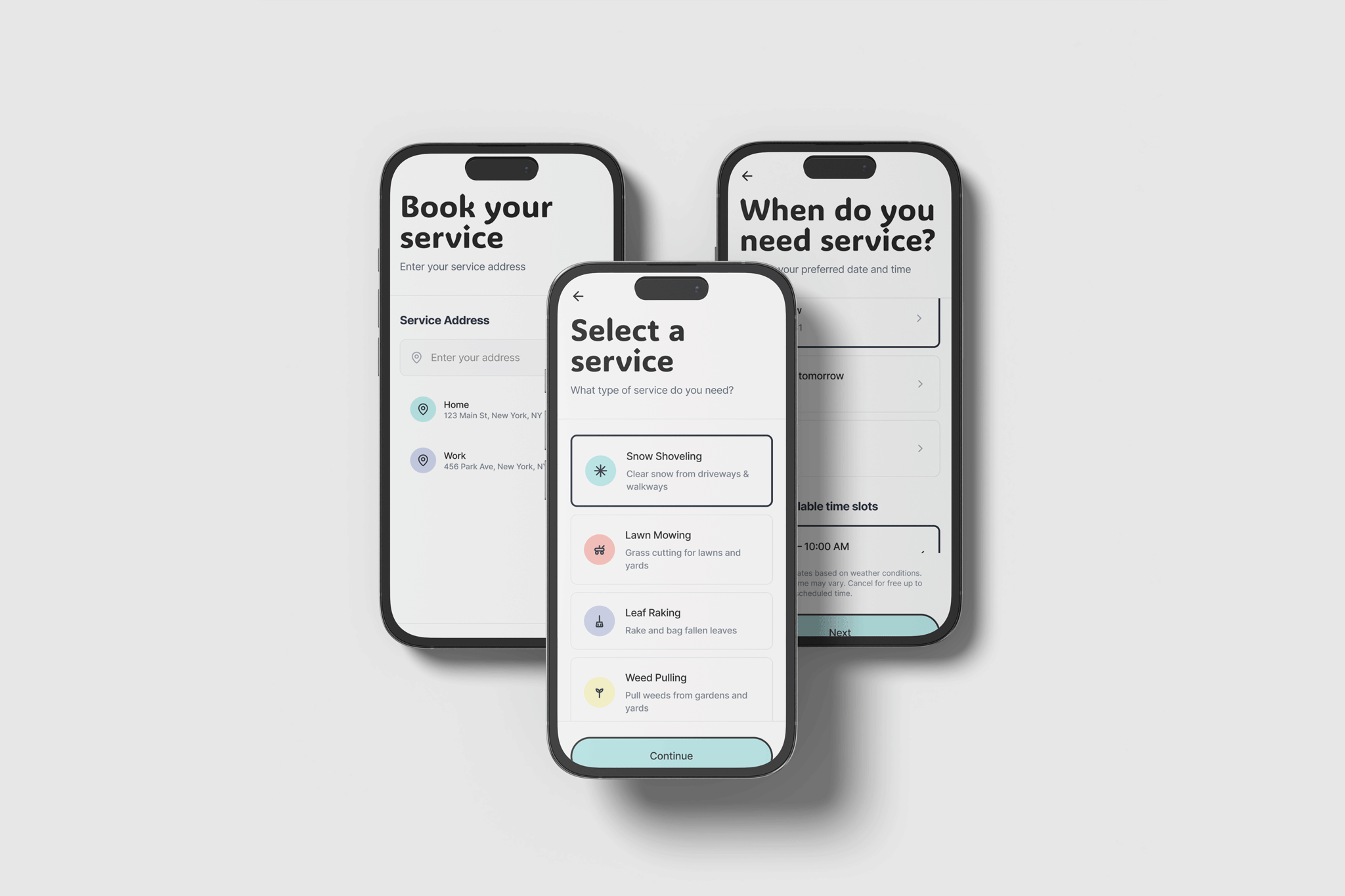
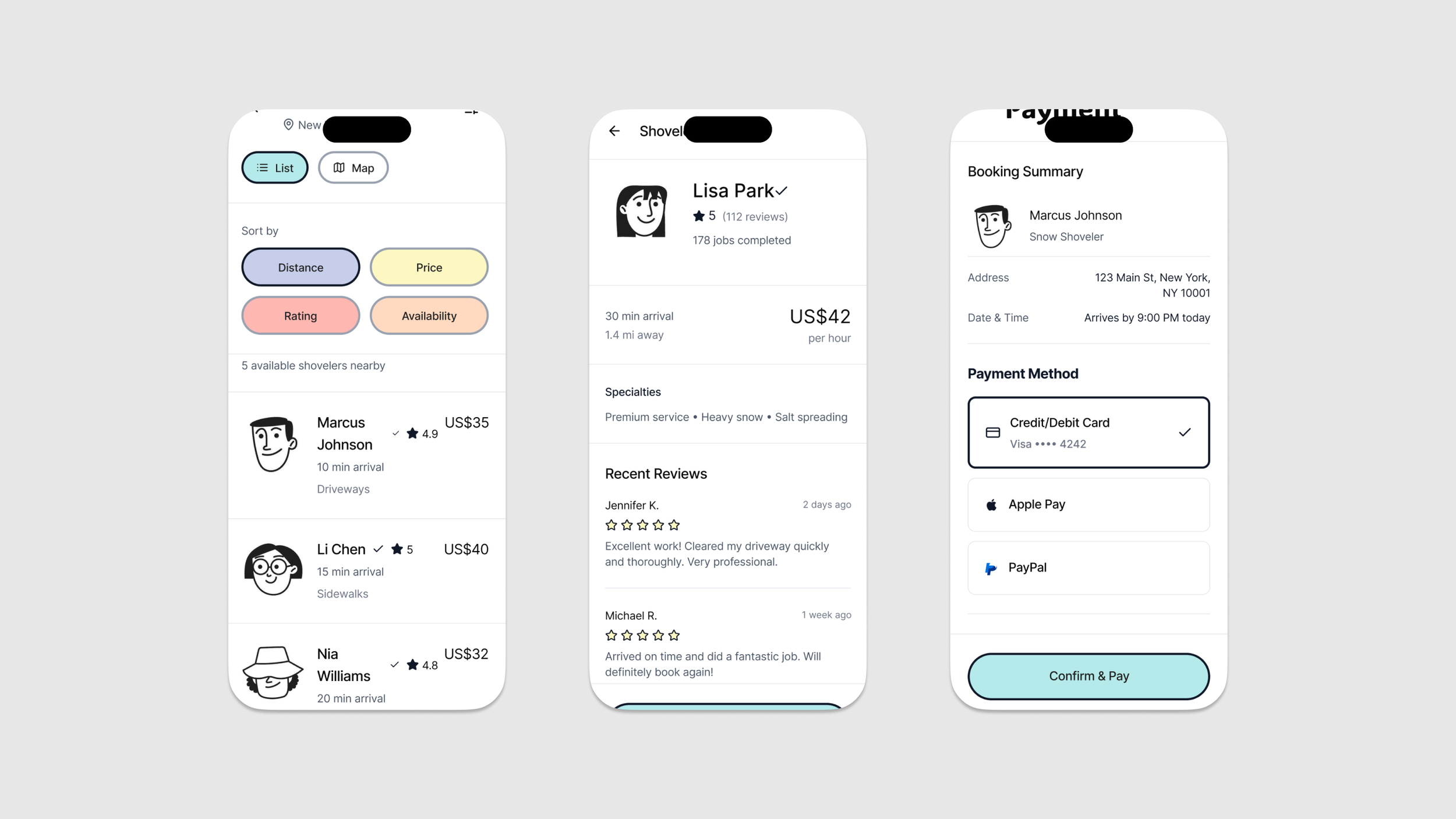
Instead of relying on scattered messages, referrals, or unclear private arrangements, Yardy helps customers describe the task, choose a time, show the site condition, understand pricing, and track the request from booking to completion.
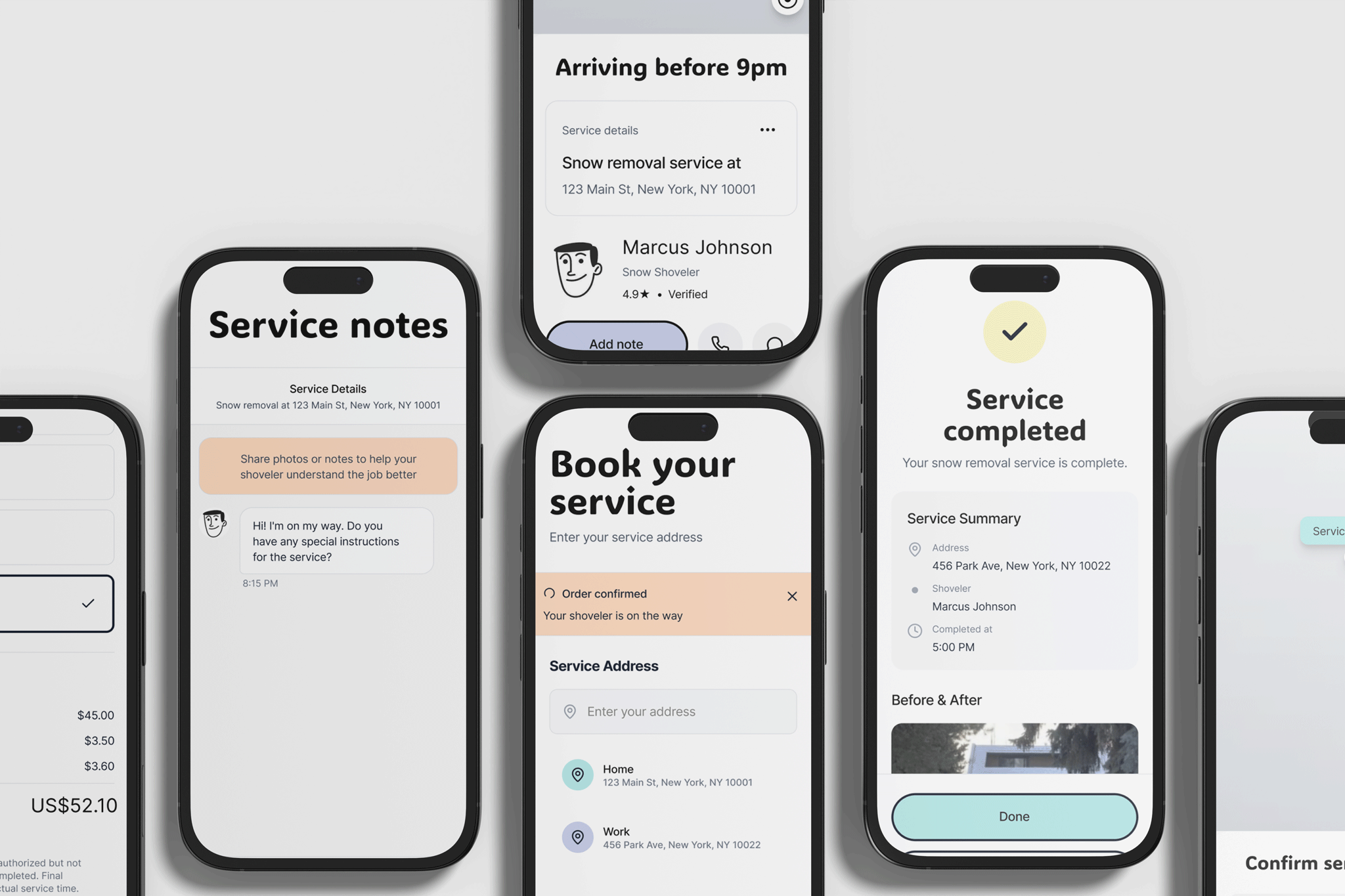
The app guides users to provide important task details, including service address, preferred time, yard or snow condition, task scope, and special notes. This makes the request easier to understand before a worker arrives.
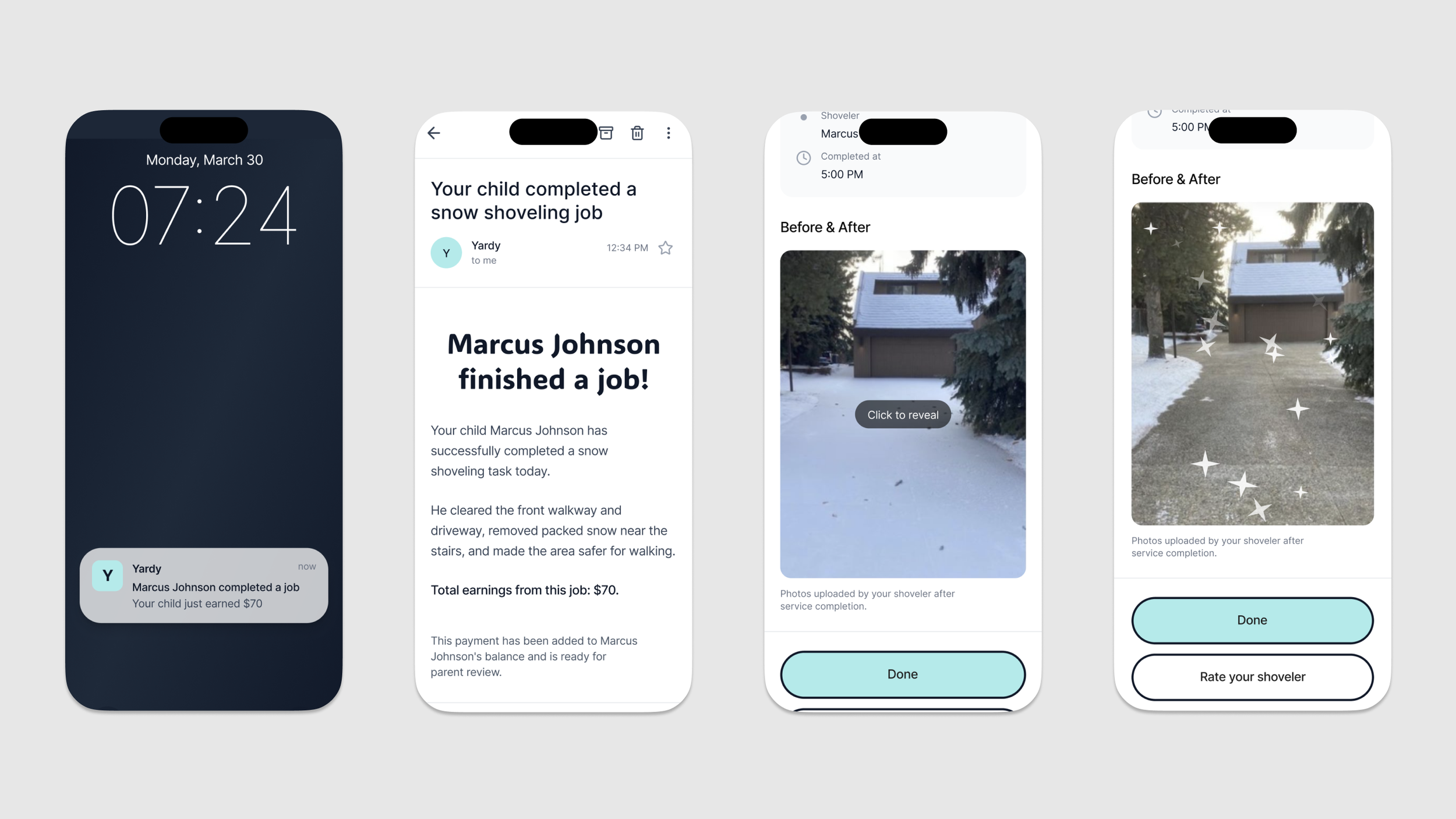
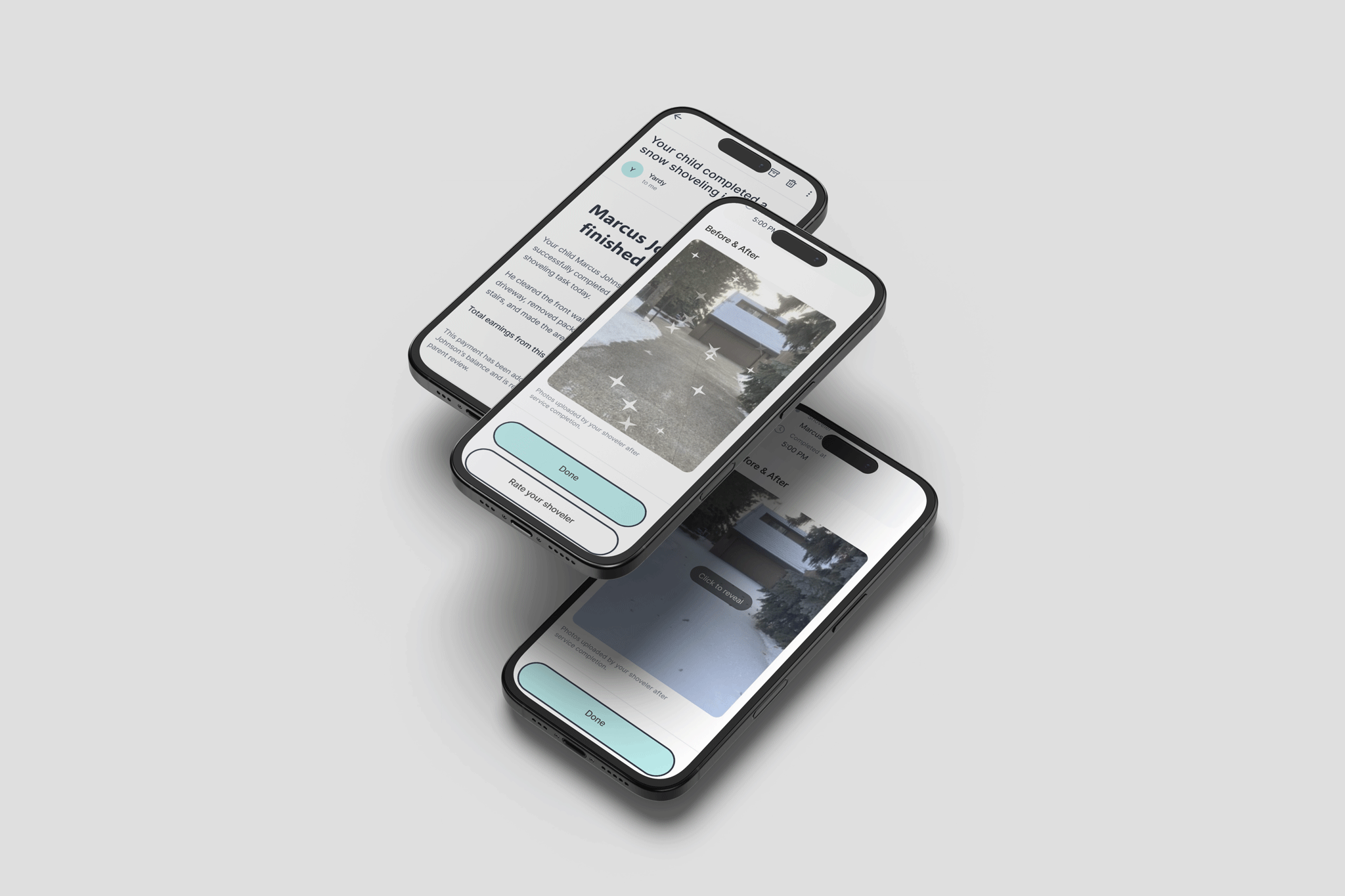
If the worker is a young person, their parents can also receive a notification showing that the job was finished, how much they earned, and what task they completed. This update can also be shared on Facebook, turning a temporary private job into a visible moment of work, progress, and recognition.
Al-Assisted Design Process
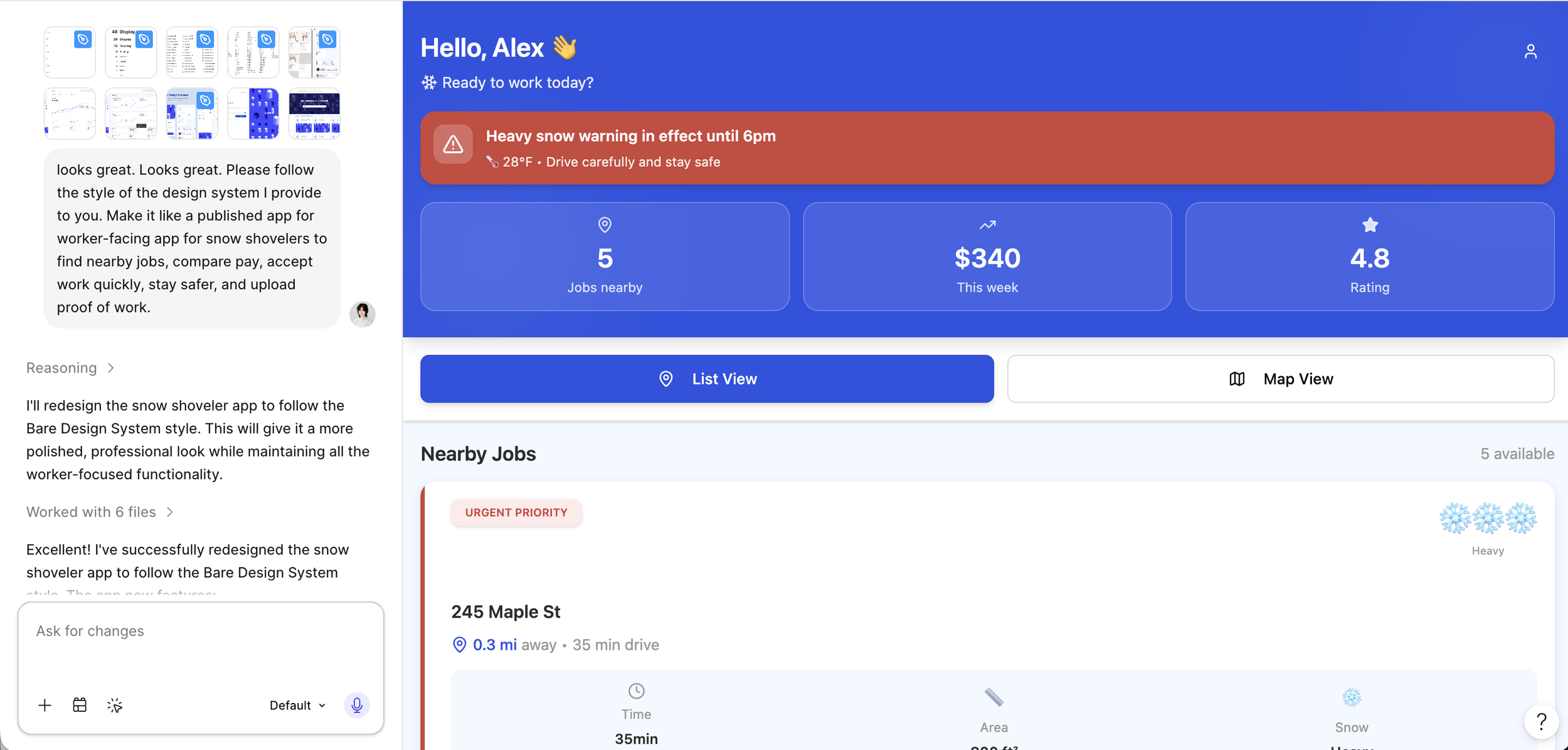
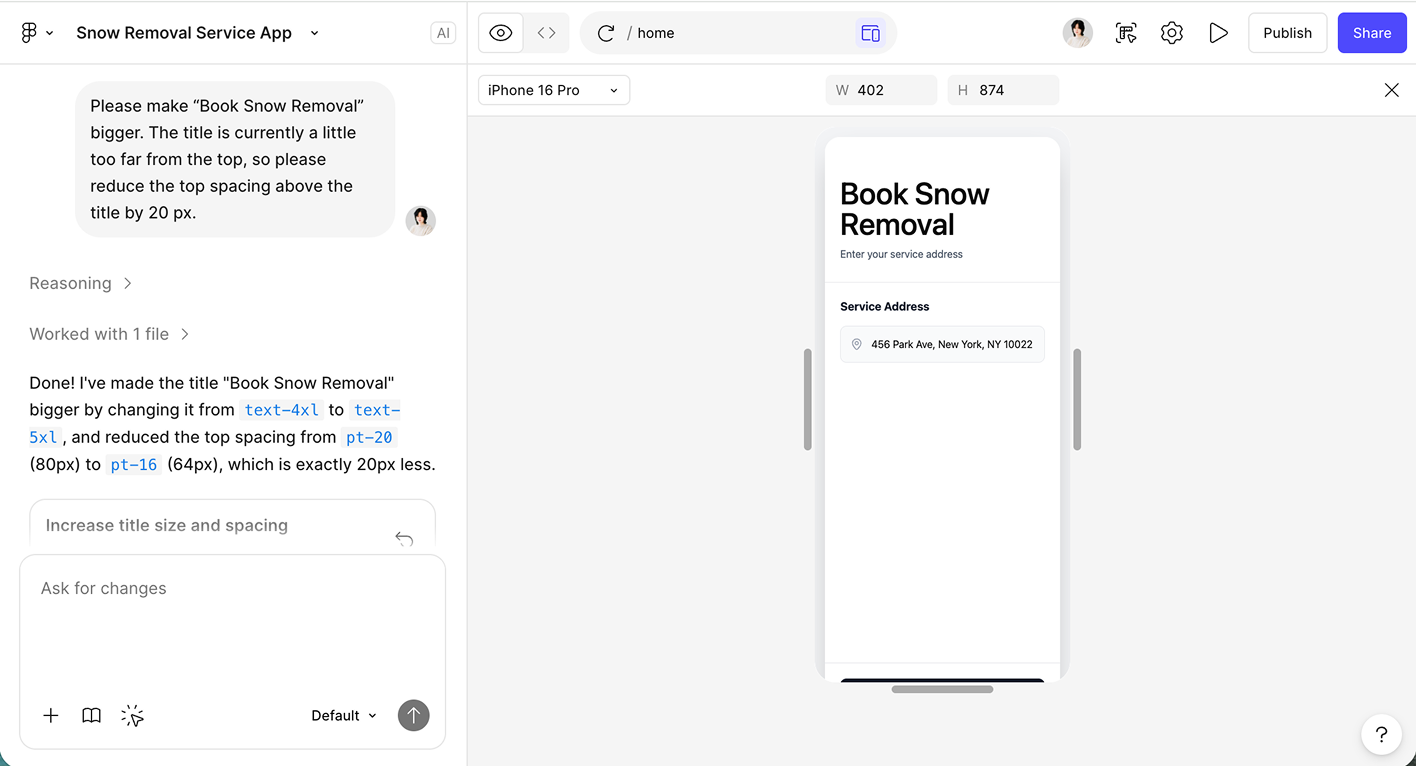
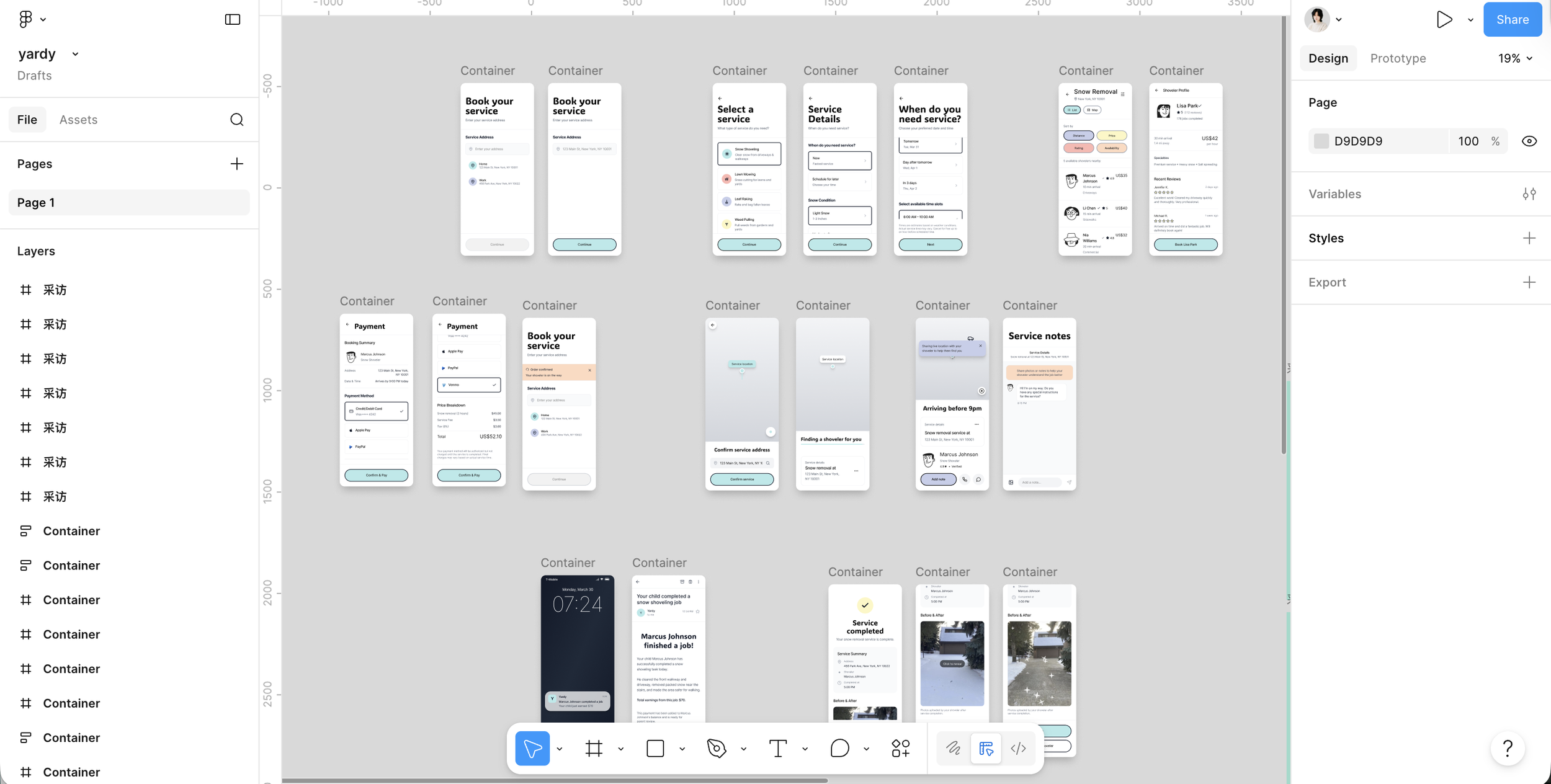
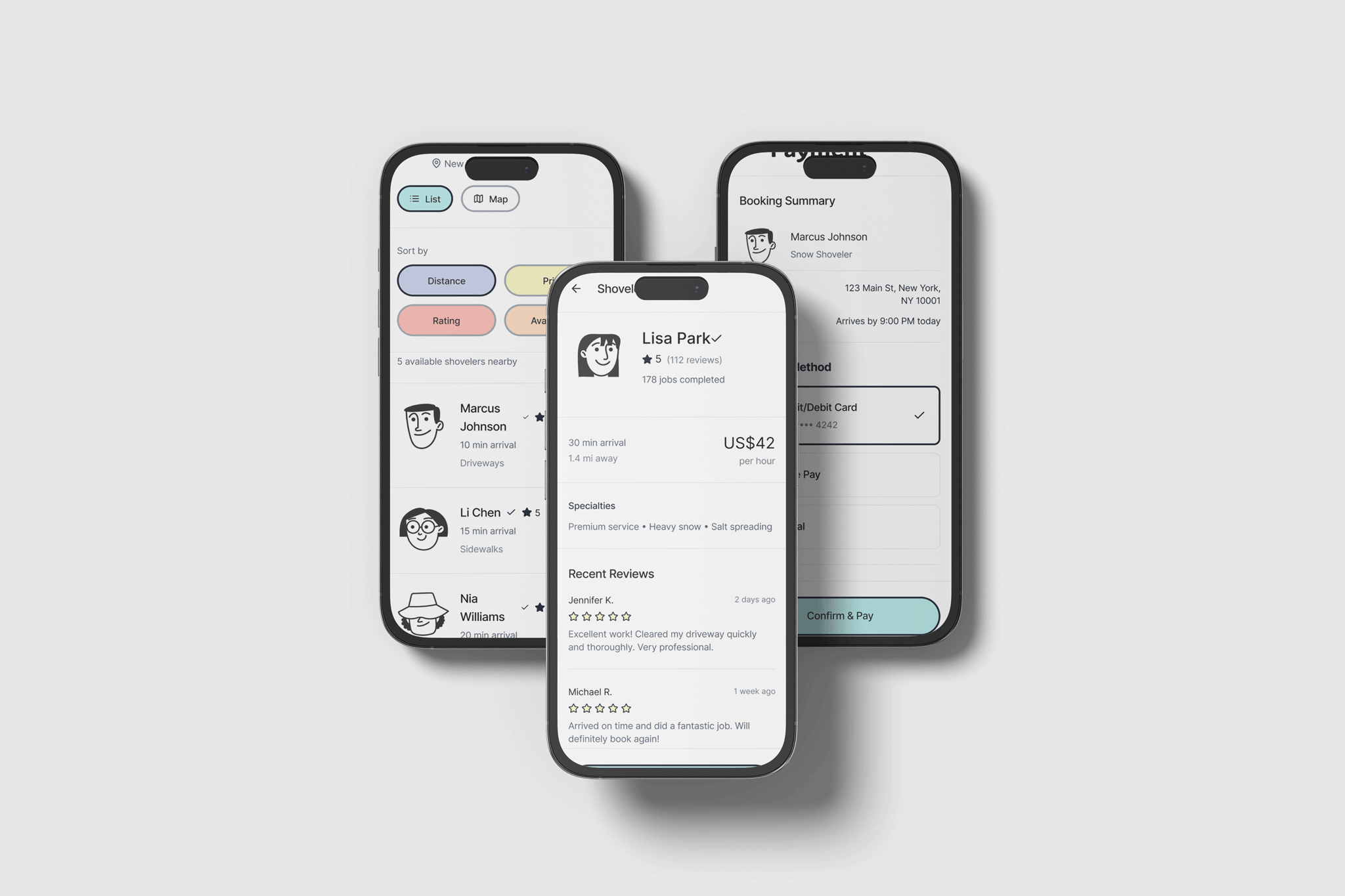
Then I used Figma Make to quickly generate different interface directions, including login screens, service category pages, snow removal request screens, address input, time selection, booking confirmation, and status update screens. These AI-generated results helped me explore user flow, spacing, button styles, card systems, and how the app could make temporary yard work easier to request.
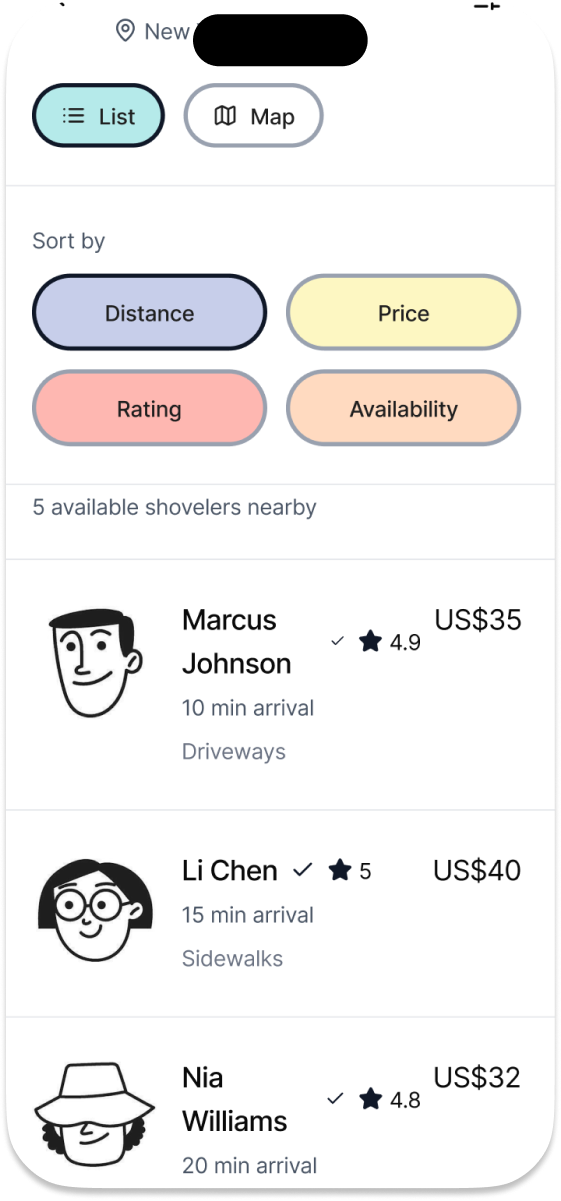
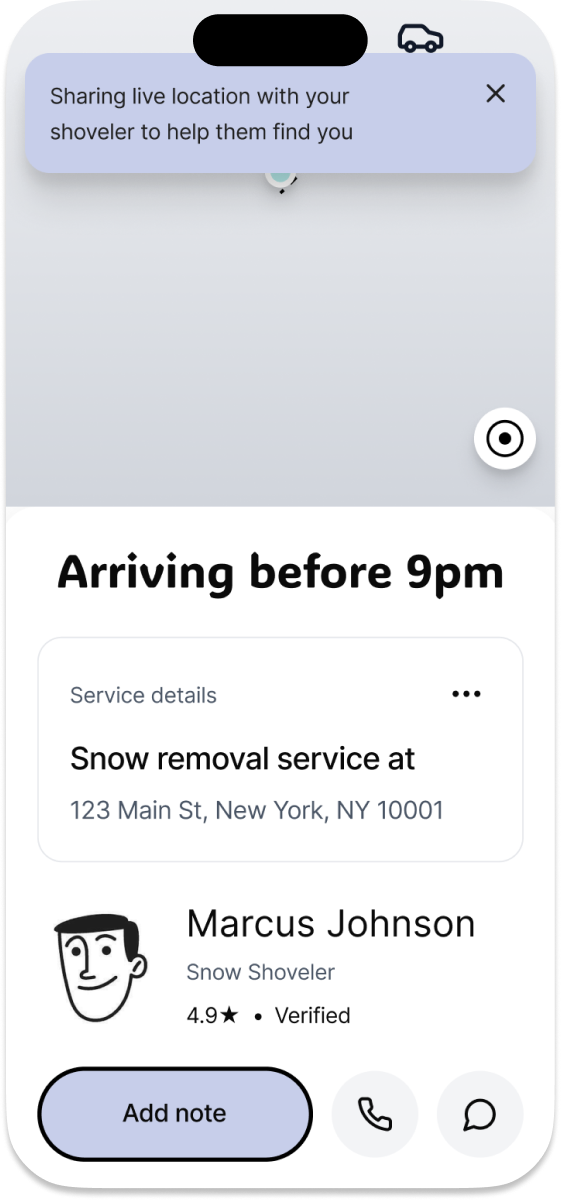
Yardy also shows booking status, estimated pricing, worker matching, confirmation, and completion updates. By recording the request process and final result, the app makes temporary yard work more visible and easier to manage.
After the job is completed, customers can review the final snow removal or yard work result through completion photos, task summaries, and before-and-after comparisons. The app can show the yard, driveway, walkway, or stairs before the service and after the work is finished, making the labor more visible and easier to evaluate. Instead of only seeing a clean space at the end, customers can understand what was changed, how much work was done, and why the service has value.
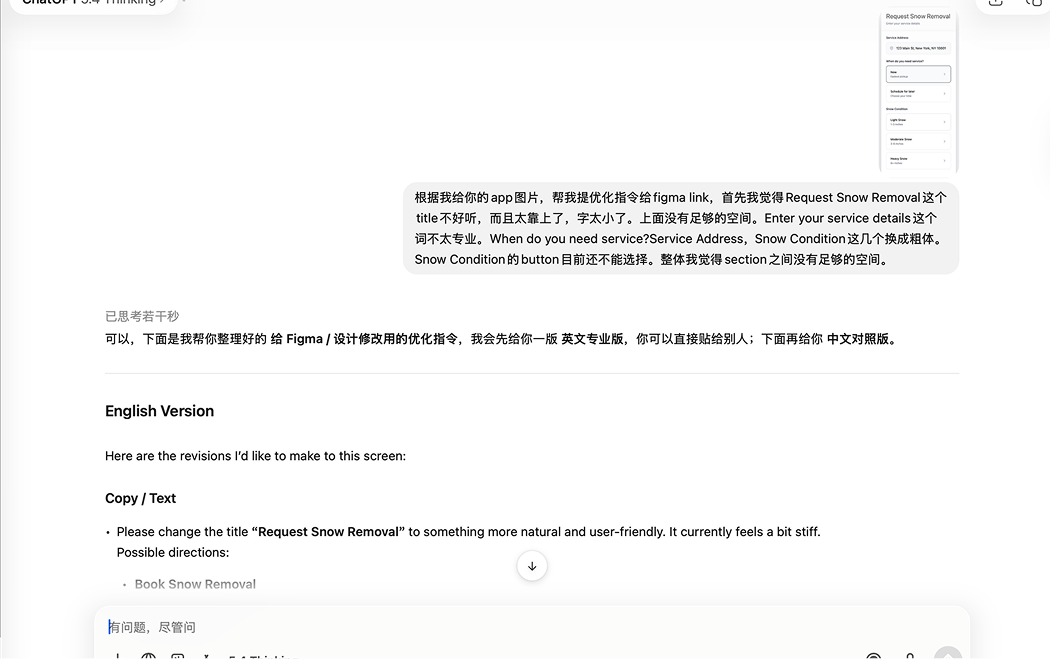
I used AI as a design partner during the development of Yardy. I first communicated with GPT to clarify the app concept, organize the product structure, and turn my ideas into clear prompts for Figma Make. I described the purpose of the app, target users, core functions, and visual tone, such as friendly, clear, practical, and trustworthy.
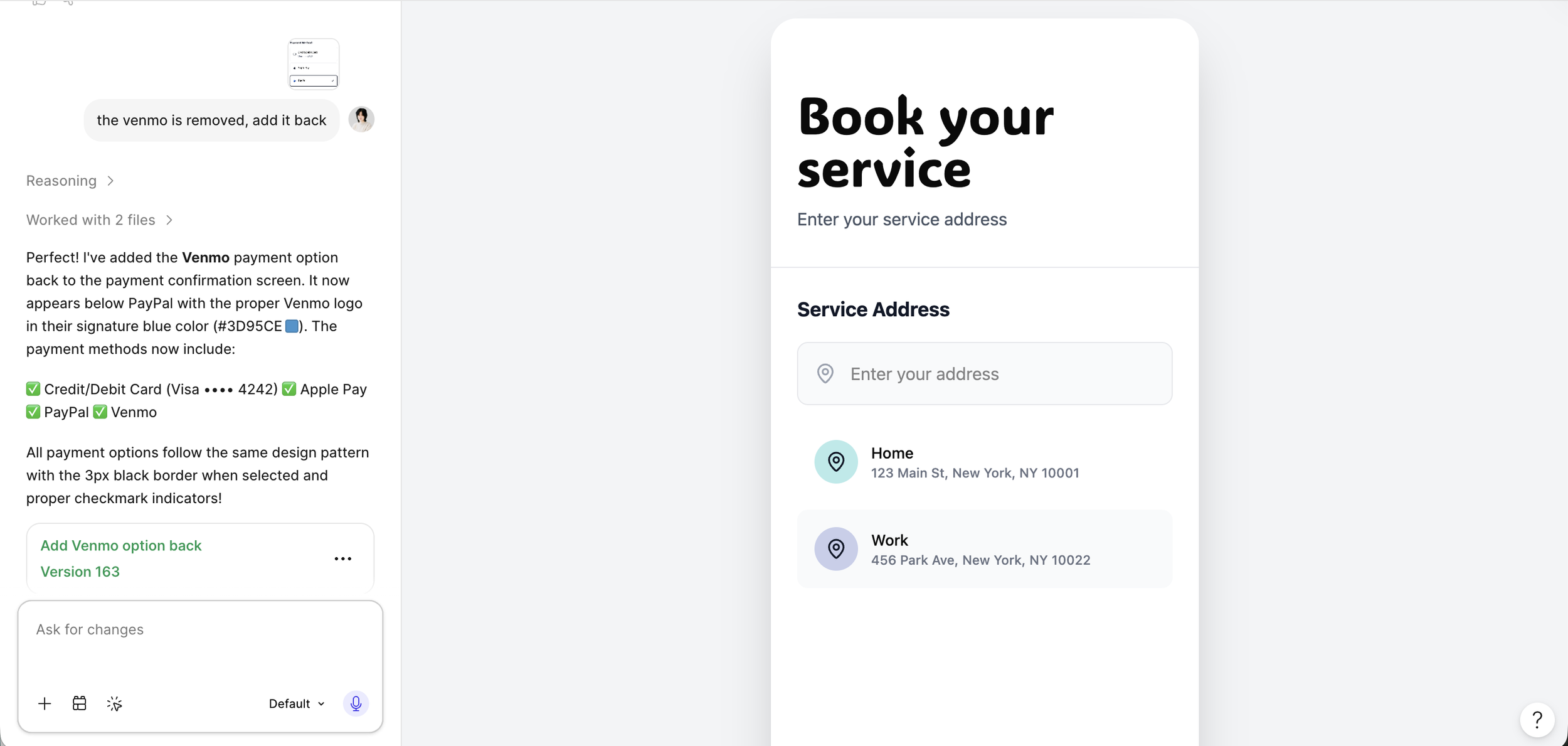
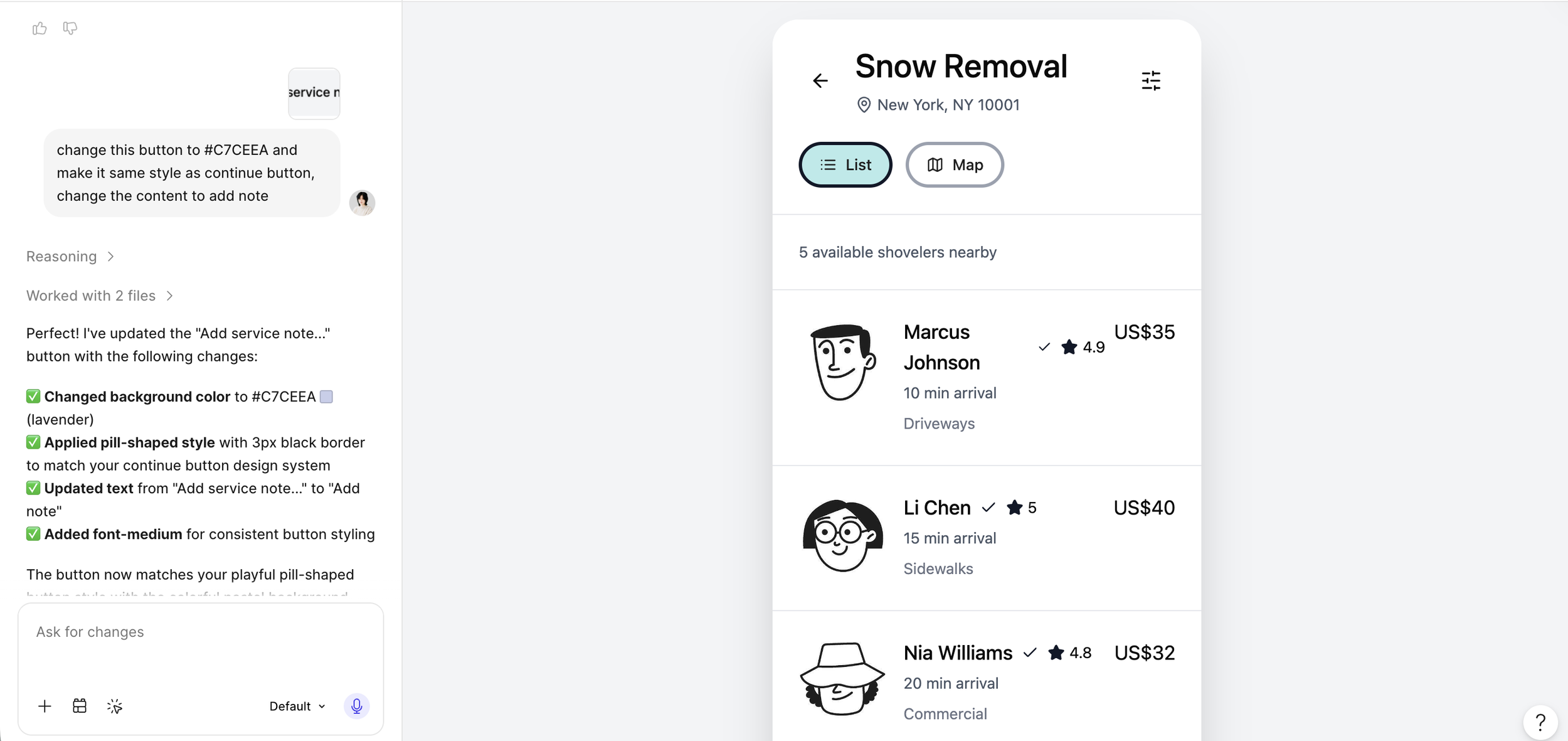
After generating the design, I exported the results into Figma and continued editing them manually. I adjusted the typography, layout, icons, colors, spacing, and written content to make the final design feel more polished and more connected to my original concept. AI helped me move faster, but the final design decisions and refinements were made by myself.
Research & Exploration
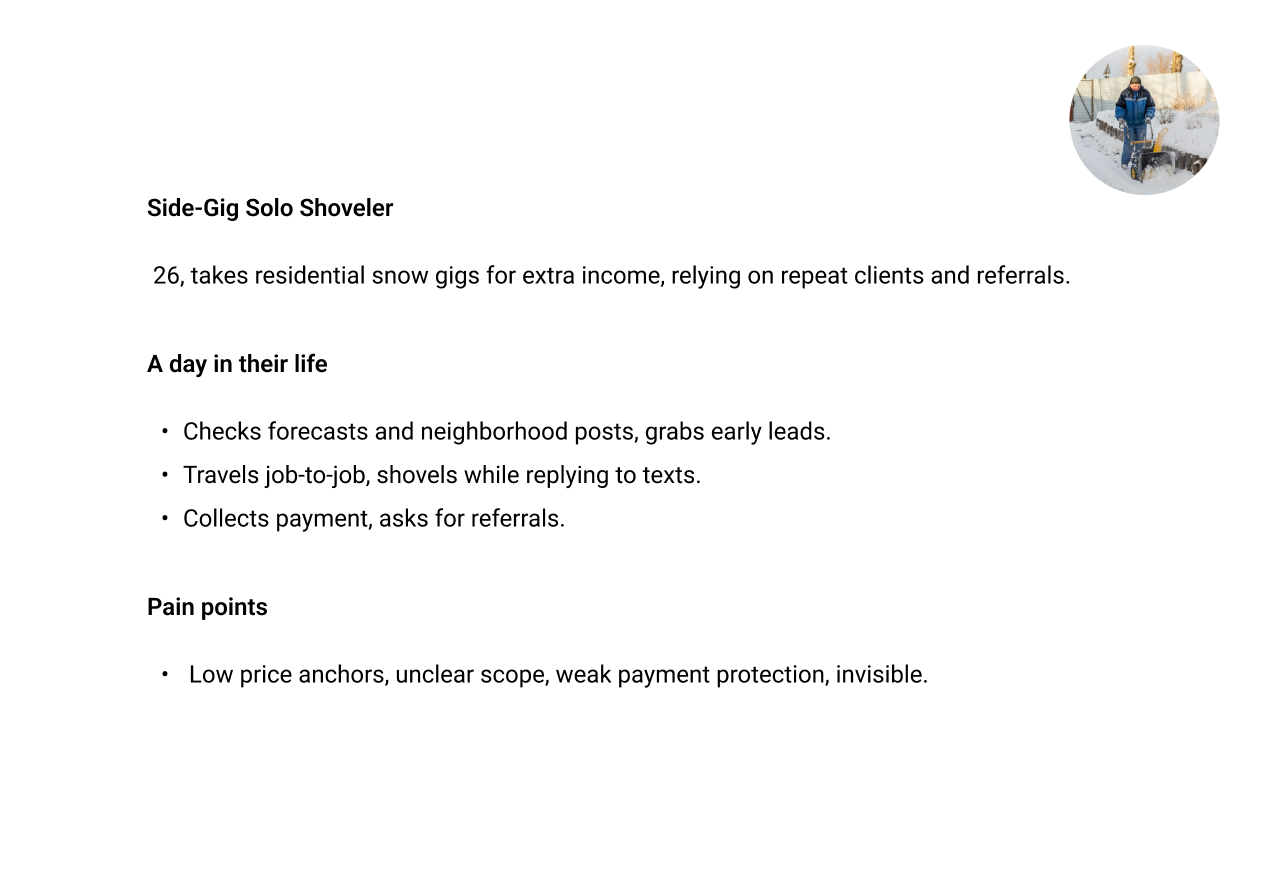
I also found that many private yard work requests happen through informal channels, such as messages, referrals, or local posts. Because of this, task scope, pricing, working conditions, and payment expectations can be unclear. This can lead to underpricing, last-minute changes, delayed payment, or the feeling that the worker’s effort is not fully respected.
User Persona
Feedback & User testing
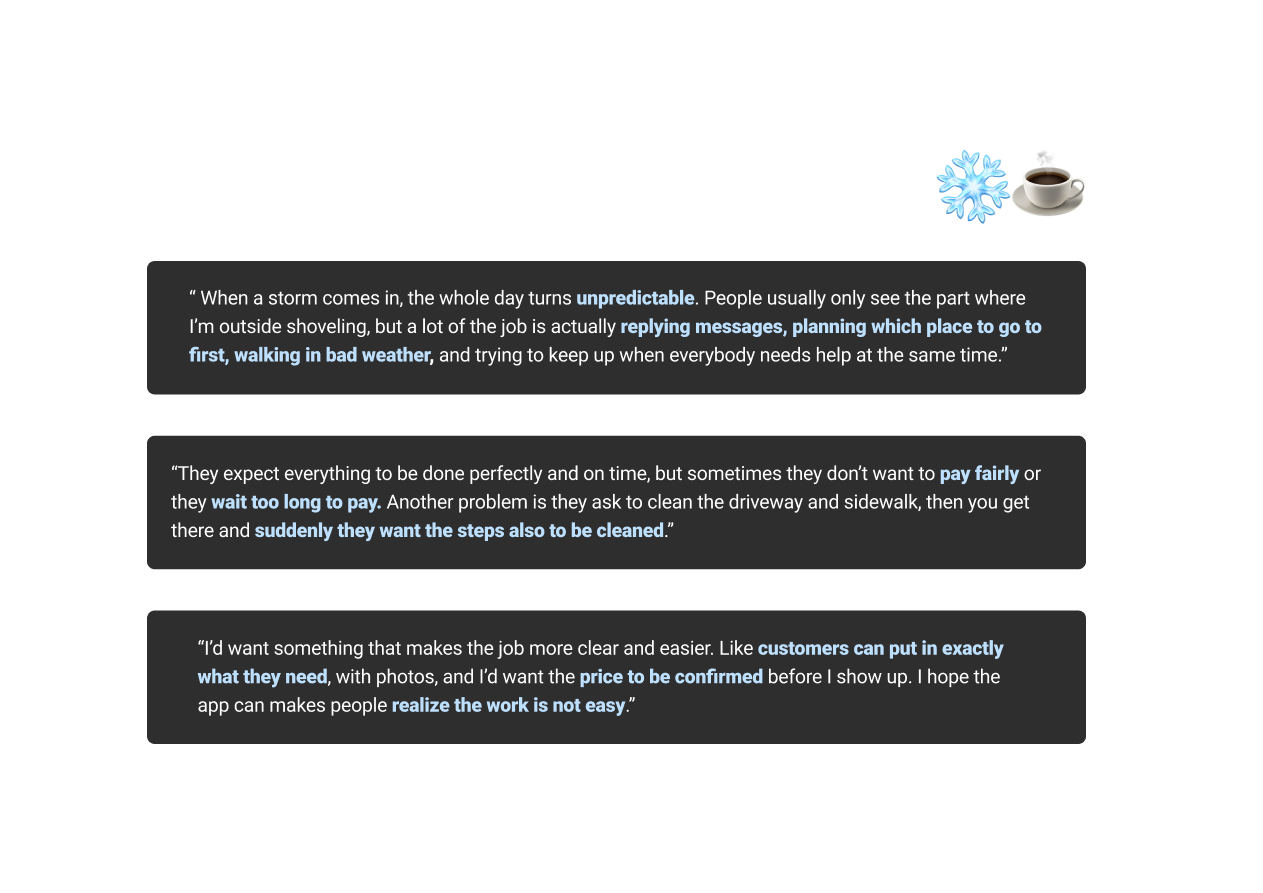
Based on this feedback, I improved the app flow by making task areas, pricing, arrival time, and booking status more visible. I also simplified the interface so customers can request yard work faster and understand each step more easily.
Visual Direction
The visual direction of Yardy is youthful, friendly, clear, and approachable. Since the app connects customers with young private gig workers, I wanted the interface to feel energetic and welcoming instead of formal or corporate.
The design uses soft colors, rounded cards, simple icons, and playful visual details to make temporary yard work feel easier to request and less stressful. The color palette gives the app a fresh and positive feeling, while the clean layout keeps important information like service type, price, time, and task area easy to understand.
Reflection
This project helped me understand that a good service app is not only about convenience. It also needs to define the task clearly, confirm the price, show the arrival time, record the result, and make the labor behind the service easier to recognize. By designing Yardy from the customer’s ordering perspective, I learned how to turn an unclear private request into a structured service experience. For me, Yardy is about making temporary work easier to see, easier to value, and harder to overlook.
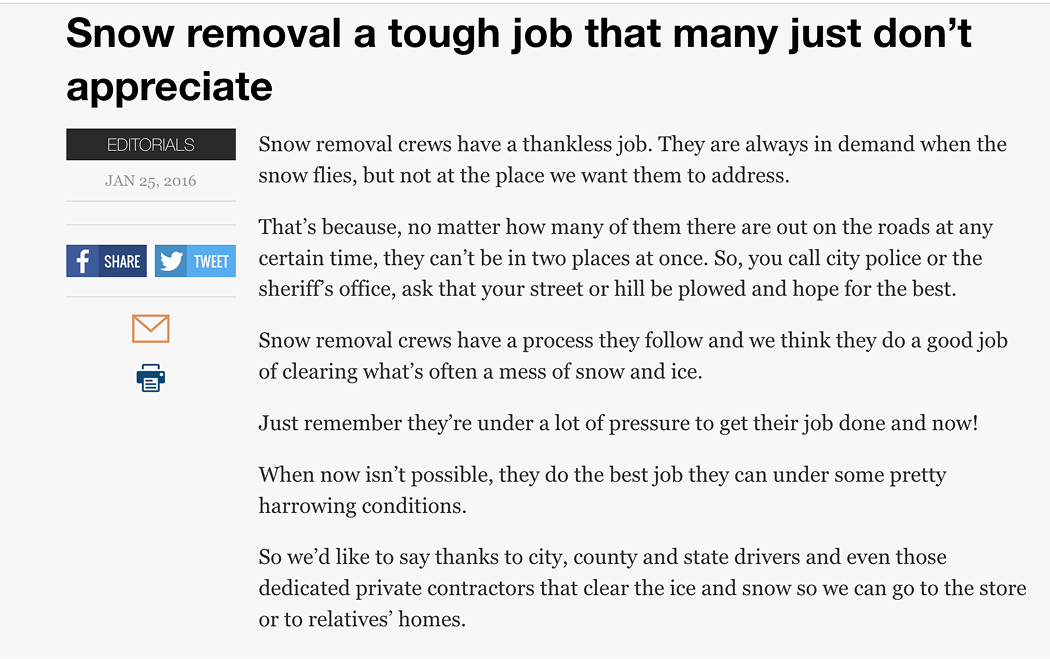
During my research, I found that temporary yard work is often treated as simple, low-value labor, even though it requires physical strength, time, endurance, and reliability. Snow shovelers often work in cold, difficult, and sometimes unsafe conditions, but their labor is only noticed when the snow is not cleared. Once the driveway, stairs, or walkway becomes clean again, the effort behind the work quickly disappears from view.
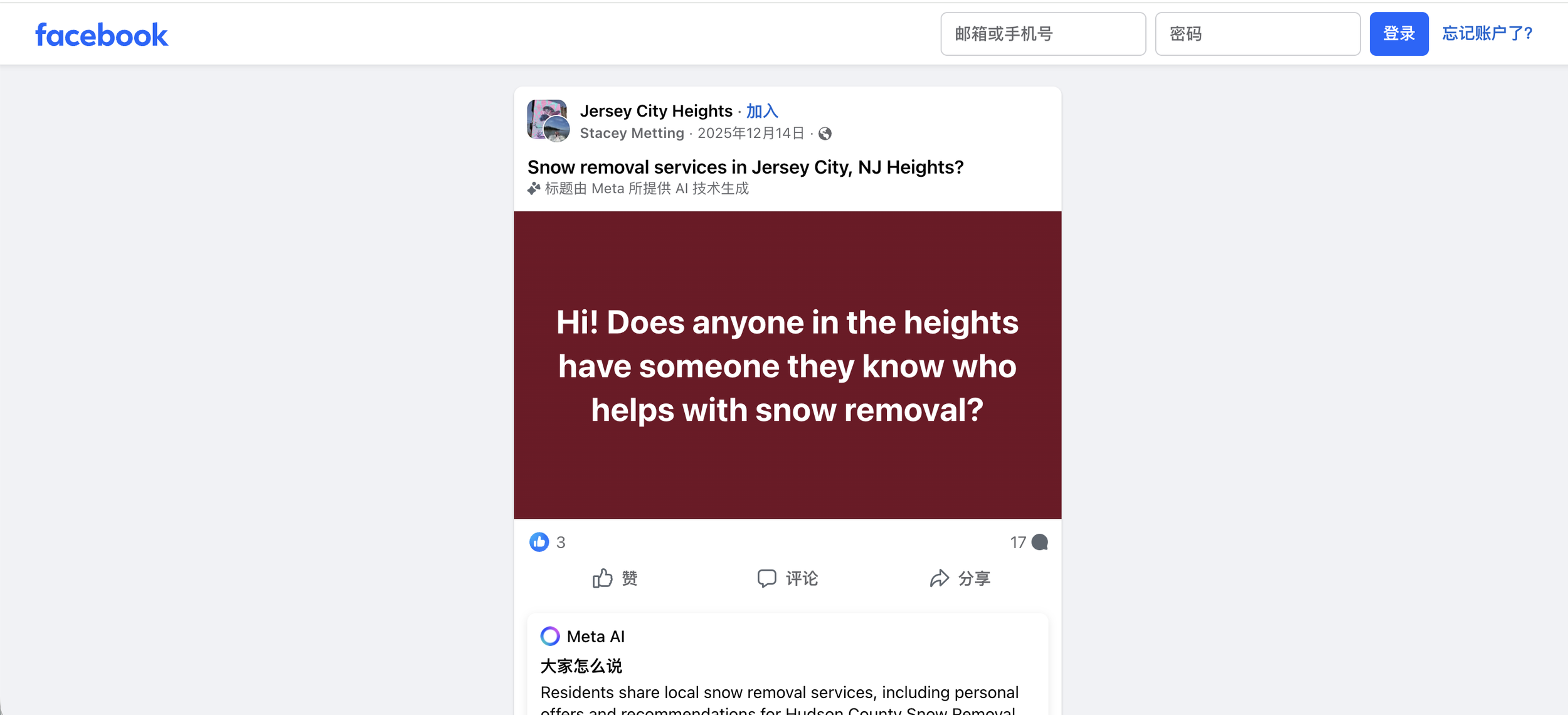
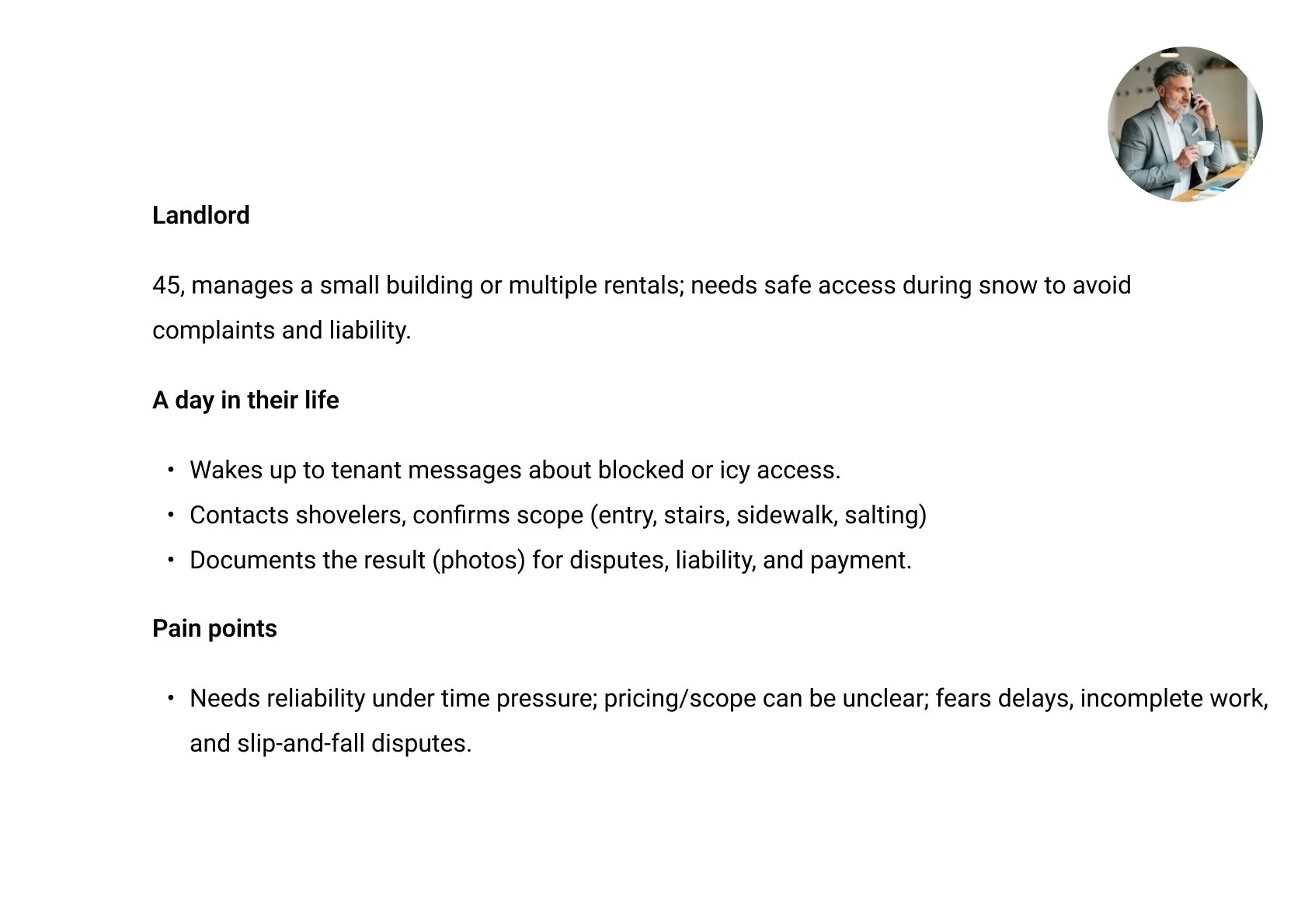
After user testing, I found that the ordering flow needed to be clearer and easier to confirm before the service starts. Customers wanted to select and confirm the exact areas that needed to be cleaned, such as the driveway, walkway, stairs, or front yard, so both sides could understand the task scope clearly.
Users also wanted the price to be confirmed directly in the app instead of being discussed separately. This would make the service feel more transparent and reduce confusion before booking. In addition, showing the worker’s estimated arrival time became important because customers need to know when the job will begin, especially for urgent snow removal.